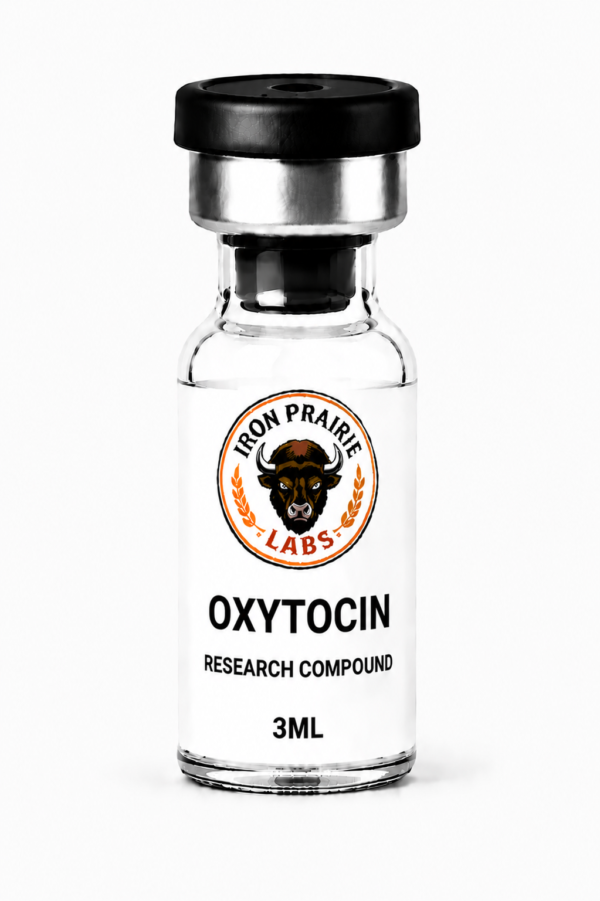
Oxytocin is a nine-amino acid neuropeptide hormone synthesized in the hypothalamic paraventricular and supraoptic nuclei and released from the posterior pituitary. Often called the ‘bonding hormone,’ oxytocin has been the subject of extensive research across diverse fields including reproductive biology, social neuroscience, and metabolic physiology. Its receptor, the oxytocin receptor (OTR), is expressed in numerous peripheral tissues and brain regions.
Researchers have studied oxytocin extensively for its roles in reproductive physiology, including stimulation of uterine contractions and milk ejection from mammary glands. Research has examined its central effects on social behavior, trust, anxiety, and pair bonding in animal models, identifying the amygdala, nucleus accumbens, and hypothalamus as key sites of action. Studies have also explored oxytocin’s anti-inflammatory and stress-modulating properties.
More recent research has examined oxytocin’s potential role in metabolic regulation. Studies have explored its effects on food intake, adipose tissue lipolysis, and insulin sensitivity in animal models. Research has also investigated its influence on the gut-brain axis and its interactions with the reward circuitry involved in appetite and food preference. Its complex biology across multiple organ systems continues to make it a compound of broad scientific interest.
For research use only. Not for human consumption. Iron Prairie Labs products are intended for qualified researchers and laboratory use only.

Reviews
There are no reviews yet.