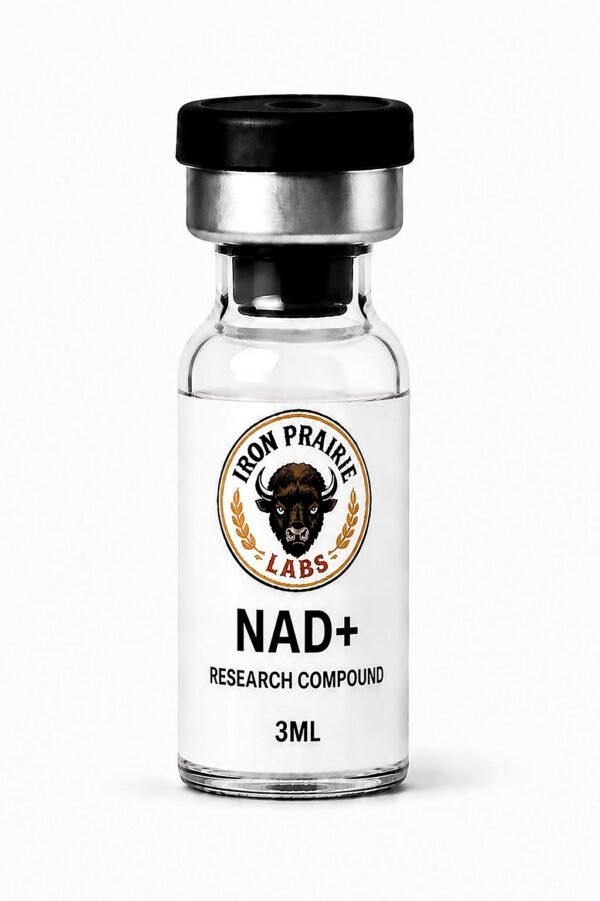
NAD+ (Nicotinamide Adenine Dinucleotide) is an essential coenzyme found in all living cells, serving as a fundamental electron carrier in cellular energy metabolism. It participates in hundreds of redox reactions, cycling between its oxidized form (NAD+) and reduced form (NADH) to transfer electrons in glycolysis, the TCA cycle, and oxidative phosphorylation. Beyond energy metabolism, NAD+ is consumed as a substrate by several classes of signaling enzymes.
Researchers have studied NAD+ for its roles as a substrate for sirtuins (NAD+-dependent deacylases), PARPs (poly ADP-ribose polymerases involved in DNA repair), and CD38/CD157 (NAD+-consuming enzymes involved in calcium signaling). Studies have examined how NAD+ availability regulates sirtuin activity, which in turn modulates mitochondrial biogenesis, fatty acid oxidation, and stress response pathways through deacylation of target proteins. Research has explored how NAD+ levels decline with age and in various disease states.
Preclinical research has investigated NAD+ repletion strategies in aging models, exploring effects on metabolic function, mitochondrial respiration, and markers of cellular senescence. Studies in animal models have examined NAD+ supplementation effects on cognitive function, muscle health, and longevity parameters. Research has also explored its potential to modulate inflammatory pathways through PARP-1 activity and its role in DNA damage response and repair.
For research use only. Not for human consumption. Iron Prairie Labs products are intended for qualified researchers and laboratory use only.

Reviews
There are no reviews yet.